
You Cannot Have It All — Or Can You?
BLOGGING AWAY
You Cannot Have It All — Or Can You?
02.03.2026
The Idea of Trade-Offs
Recently, I watched a video by Alex Hormozi titled "How to Change Your Life", in which he argues that every decision in life is a trade-off.
The premise is simple: when you choose one path, you necessarily exclude another. Time, energy, and attention are finite. To commit to one direction is to close the door on other alternatives, and so it naturally follows that “you cannot have it all.”
I find myself resisting the conclusion that follows from this logic—not because the logic itself is flawed, but because it assumes something about the nature of human beings and fulfillment that doesn’t feel right.
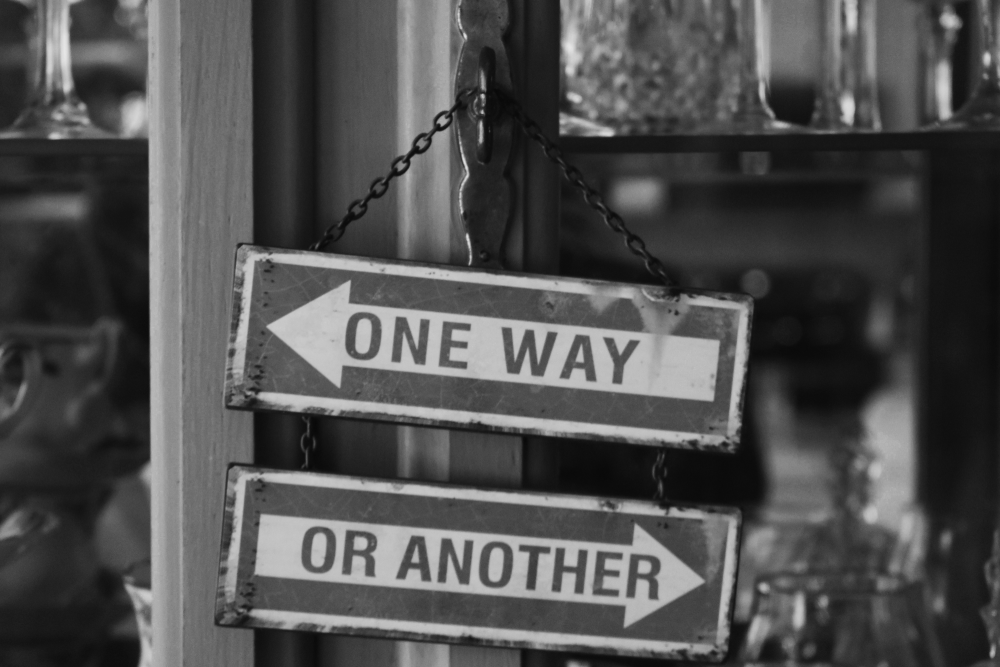
So this is my belief: you CAN have it all—but it’s not what you think.
Beyond the Logic of the Mind
The trade-off framework assumes that life is about maximizing or optimizing experiences. It imagines existence as a horizontal spread of possibilities laid out before us, like items on a menu.
If I choose one career, I eliminate another. If I move to one place, I abandon a different version of my life. If I commit to one relationship, I close the door on countless alternatives.
But what if this approach misses something?
When choosing between a myriad of possibilities, am I really choosing by subtraction? Or is there a way in which, no matter what choice I make, I can have it all—so that there is no truly “lost” scenario?
What if having it all meant finding fulfillment in living according to one’s own essence? What if life allowed only two movements: closer to yourself or further away from yourself, regardless of the external path you take?
And what if there were no higher prize than the fulfillment found in embodying your soul—greater than any external outcome the mind could calculate?
Alignment Instead of Choice
The more meaningful question, then, is not what is being chosen and what is being missed, but who is being lived—and how.
Which path brings me closer to my true self and my purpose here?
When life is seen through this lens, the fear of missing out—or of making ‘mistakes’—begins to dissolve. The ultimate prize is not achievement, status, or numbers but fulfillment through alignment with the self.
From here, the questions to ask when making decisions become simpler:
Is this energizing or draining?
Is this coming from expectation, fear, or habit—or from something deeper and more authentic?
Is this a movement toward myself, or away from myself?
Sometimes several paths lead to the same outcome. Other times, every path, if lived consciously, leads to the same outcome—whether through excitement or pain.
Both experiences offer information, both refine direction.
What “Having It All” Really Means
The trade-off exists at the level of form. At the level of the spirit, the movement is always toward the same recognition. Every path, if lived consciously, can lead to the same underlying awakening.
This does not mean that all choices are equal in their immediate consequences, nor that discernment is irrelevant.
Some paths may allow a clearer or more direct expression of one’s nature, while others may obscure it for a time. Yet even obscuration can become part of the unfolding.
If life is seen as a mathematical equation, then yes—everything that isn’t chosen is lost.
But if life is seen as the unfolding of one’s true self, something shifts. It becomes less about subtraction and more about revelation. Like sculpting a statue, nothing essential is removed—only what doesn’t belong, allowing what is already there to emerge.
In this sense, having it all does not mean experiencing the totality of external options, but embodying the depth of our own being. It means choosing the self again and again, chipping away what is unnecessary to reveal the essence within.
And when that happens, true fulfillment becomes both the natural outcome and the highest reward.
My office
Anywhere in the world
Contact
hello@valeriafontana.com
Subconscious Mind Coach